Industrial RO Membrane Troubleshooting Guide
 Andrew
August 18, 2026
#industrialro
#low pressure membrane
#reverseosmosis
#romembrane
#sea water membrane price
#seawaterdesalination
#watertreatment
Andrew
August 18, 2026
#industrialro
#low pressure membrane
#reverseosmosis
#romembrane
#sea water membrane price
#seawaterdesalination
#watertreatment
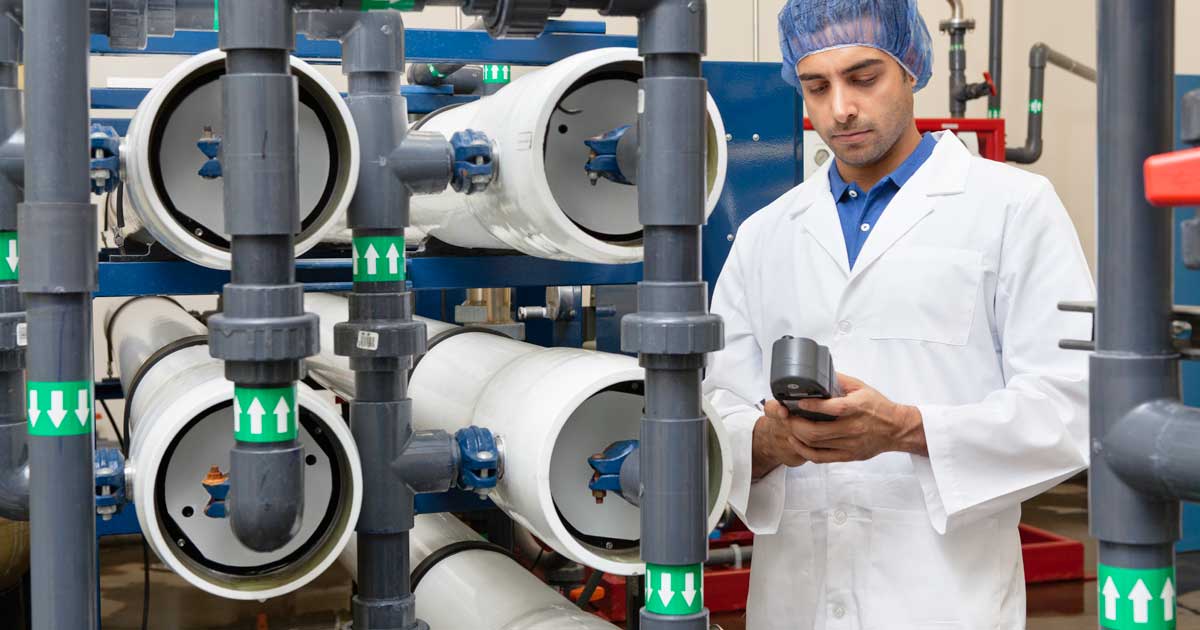
When reverse osmosis systems at large industrial or commercial plants are operating smoothly, they are a wonder of modern water filtration science. Plant owners and operators know that fouling and scaling can lead to short periods of downtime for routine maintenance, while chemical exposure, bad O-rings, and cracked pressure vessels can be bigger headaches.
All Filters' area of expertise is in pre-filter changeouts and compatible RO membrane replacements, but our customers experience a wide range of scheduled and unplanned downtime. Whether you're experiencing trouble with 4" 4040 systems, large format 8040 reverse osmosis installations, or compact units with smaller membranes, here are a few things to know when you reach out to your system integrator or local industrial water treatment contractor for help.
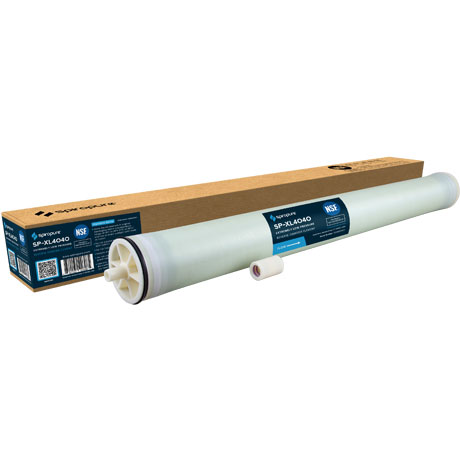
SpiroPure SP-XL4040 Extremely Low Pressure 4x40 Industrial RO Membrane Element

SpiroPure SP-BW4040 Brackish Water 4x40 Industrial RO Membrane Element
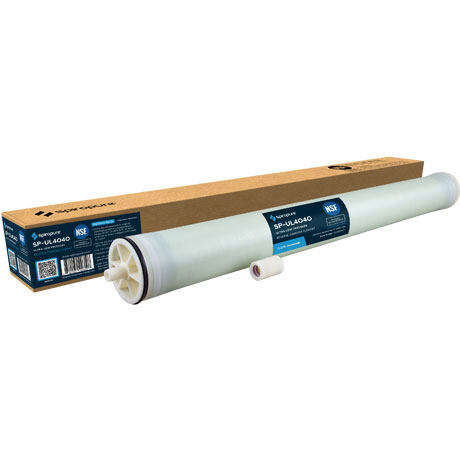
SpiroPure SP-UL4040 Ultra Low Pressure 4x40 Industrial RO Membrane Element
Why Industrial RO Membranes Lose Performance
Unless a pre-filter fails or water quality unexpectedly changes, a decline in performance typically doesn't happen overnight. Industrial RO membranes will more likely lose efficiency gradually, through a combination of fouling (organic matter, biological growth, or colloidal particles building up on the membrane surface), scaling (mineral deposits from feed water), and general operational wear.
A pretreatment equipment malfunction, a pressure control issue, or a shift in system recovery can sometimes look like a membrane failure at first glance. A solid diagnostic process can help: rule out pretreatment and operational causes first by using your system's own log sheets and data. Since these durable filters, whether 4040 or 8040 low pressure, brackish water, or seawater desalination membranes, can last anywhere from a year or two and on up to 5 years, running diagnostics is a great starting point before concluding that a membrane needs cleaning or replacement.
Common Signs Your Industrial RO Membrane Needs Troubleshooting
Many industrial RO problems announce themselves through measurable changes rather than sudden failures, which is exactly why consistent record keeping matters so much. Watch for:
- Low permeate flow: your system produces noticeably less treated water than its rated output for the same feed conditions
- High product water TDS: dissolved solids in your permeate rise, signaling reduced salt rejection
- Increased operating pressure: the system needs more pressure than usual to maintain the same output
- High differential pressure: the pressure drop between feed and concentrate climbs, signaling a plugged feed channel
- Reduced recovery: the ratio of permeate to feed water drops below your system's design value
- Increased energy consumption: your pumps work harder to maintain the same flow and pressure
- Frequent cleaning requirements: cleanings that used to hold for months now need repeating within weeks
SpiroPure SP-BW8040 Brackish Water 8x40 Industrial RO Membrane Element
SpiroPure SP-FR8040 Fouling Resistant 8x40 Industrial RO Membrane Element
SpiroPure SP-XL8040 Extremely Low Pressure 8x40 Industrial RO Membrane Element
As a general benchmark, cleaning is typically warranted when normalized permeate flow drops about 10%, salt passage increases 5–10%, or differential pressure increases 10–15% from baseline. Your system's operating data, tracked over time, is a reliable way to catch these trends early.
Common Causes of Industrial RO Membrane Problems
Many industrial RO problems announce themselves through measurable changes rather than sudden failures, which is exactly why consistent record keeping matters so much. Watch for:
- Low permeate flow: your system produces noticeably less treated water than its rated output for the same feed conditions
- High product water TDS: dissolved solids in your permeate rise, signaling reduced salt rejection
- Increased operating pressure: the system needs more pressure than usual to maintain the same output
- High differential pressure: the pressure drop between feed and concentrate climbs, signaling a plugged feed channel
- Reduced recovery: the ratio of permeate to feed water drops below your system's design value
- Increased energy consumption: your pumps work harder to maintain the same flow and pressure
- Frequent cleaning requirements: cleanings that used to hold for months now need repeating within weeks
As a general benchmark, cleaning is typically warranted when normalized permeate flow drops about 10%, salt passage increases 5–10%, or differential pressure increases 10–15% from baseline. Your system's operating data, tracked over time, is a reliable way to catch these trends early.
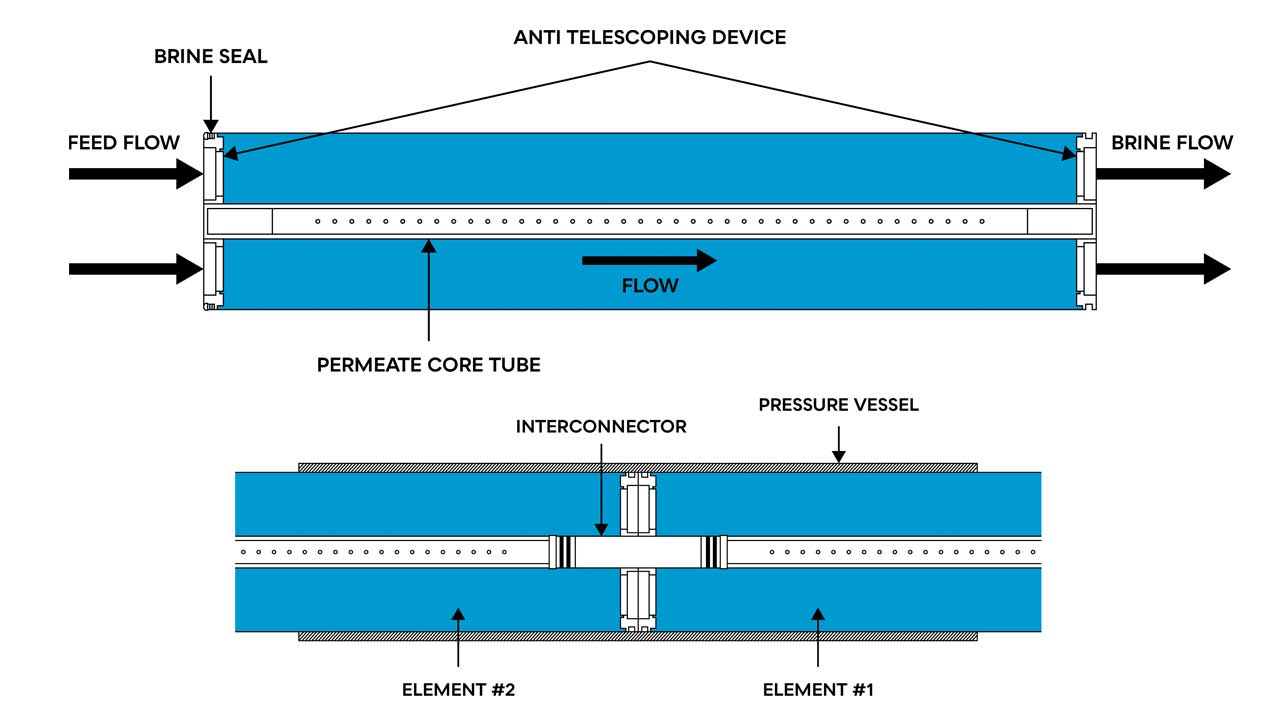
Organic Fouling
Organic matter like humic acids, oils, or biological byproducts can coat the membrane surface, reducing permeate flow. It often develops when pretreatment doesn't fully remove organic content from surface water or wastewater sources before the RO stage.
Scaling
Scaling happens when dissolved minerals like calcium carbonate, silica, or various sulfates concentrate beyond their solubility limit in the wastewater stream and collect on the membrane. It's common in systems running high recovery rates without adequate antiscalant dosing.
Biofouling
Biofilms form when bacteria colonize the membrane surface, often in systems with inconsistent operation, inadequate disinfection upstream, and tight feed spacers. Biofouling can develop gradually and is notoriously difficult to fully remove once established.
Colloidal Fouling
Microscopic undissolved suspended particles of silt, clay, silica, metals, and organic matter that pass through inadequate pretreatment can plug the feed channels between membrane leaves, raising differential pressure well before they meaningfully affect permeate flow.
Chemical Damage
Cleaning outside recommended pH and temperature ranges, or using incompatible chemicals like non-ionic surfactants or certain coagulants, can permanently damage membrane material rather than restore performance.
Mechanical Damage
Physical shock from water hammer, pressure spikes, vibration, or improper element loading can crack the membrane's fiberglass shell or dislodge internal components, causing feed-to-permeate leaks that no cleaning can fix.
SpiroPure SP-SW4040 Seawater Desalination 4x40 Industrial RO Membrane Element
SpiroPure SP-SW8040 Seawater Desalination 8x40 Industrial RO Membrane Element
SpiroPure SP-ES8040 Energy Saving 8x40 Industrial RO Membrane Element
Oxidation from Chlorine Exposure
Standard composite polyamide RO membranes, the material used in most commercial and industrial elements, are not tolerant to chlorine. Even brief exposure to free chlorine or strong oxidizers such as bromamine or hydrogen peroxide can permanently degrade the membrane's rejection capability.
How to Troubleshoot Industrial RO Membrane Problems Step by Step
Before calling your system integrator or local water treatment contractor, gathering a few key data points can speed up diagnosis considerably. Walk through these in order:
- Inspect operating pressure. Compare current feed pressure against your system's design baseline for the same flow and recovery.
- Check permeate flow. Compare today's output against your logged baseline under similar feed conditions and temperature.
- Measure feed and permeate TDS. A rising permeate TDS alongside stable feed TDS points toward reduced salt rejection.
- Compare differential pressure. A climbing gap between feed and concentrate pressure usually signals a plugging feed channel.
- Review pretreatment equipment. Confirm sediment and carbon media filters, softeners, ultrafiltration, and/or dosing pumps for flocculants, coagulants, and pH adjusters are functioning as designed, since pretreatment issues are a common root cause.
- Inspect cartridge filters. A skipped or overdue pre-filter change can let sediment and chlorine reach the membrane directly.
- Check membrane age. Membranes nearing the end of their typical service life naturally show gradual performance decline.
- Review cleaning history. Frequent or recent cleanings with limited recovery can indicate the membrane is approaching end of life rather than needing another cleaning cycle.
This data is part of what your integrator, contractor, or system software will want to diagnose the issue accurately and recommend next steps.
None of this general advice replaces a proper diagnostic from your system integrator, industrial water treatment contractor, or your system's own monitoring software, especially for warranty-related questions or complex multi-cause problems.
For a deeper technical reference, our SpiroPure industrial RO membrane manual1 covers element loading, start-up sequencing, and full cleaning chemistry in detail, useful reading if your team handles cleaning and maintenance in-house. And if you've confirmed the issue points to the membrane's usage or age rather than the system, browsing our reverse osmosis water filter selection is the next step, matching your exact model number to a compatible replacement. Compare commercial and industrial RO membrane prices in the SpiroPure catalog against your current supplier before you commit to a replacement.
1 Portions of this guide are adapted from SpiroPure's Industrial RO Membrane technical manual, which serves as the source reference for the cleaning thresholds and fouling categories discussed here.