Commercial RO Membrane Selection Guide
 Andrew
August 19, 2026
#brackishwater
#business
#commercialro
#reverseosmosis
#romembrane
#seawaterdesalination
Andrew
August 19, 2026
#brackishwater
#business
#commercialro
#reverseosmosis
#romembrane
#seawaterdesalination
- The model number on your existing membrane is the single most reliable way to find a matching replacement; specs alone (size and GPD) narrow the field but can't guarantee identical performance
- Membrane size is tied to your existing pressure vessel, not chosen independently
- Feed water quality helps point to which membrane type will be needed when selecting a system for your business application, and pre-filtration protects the membrane from premature fouling
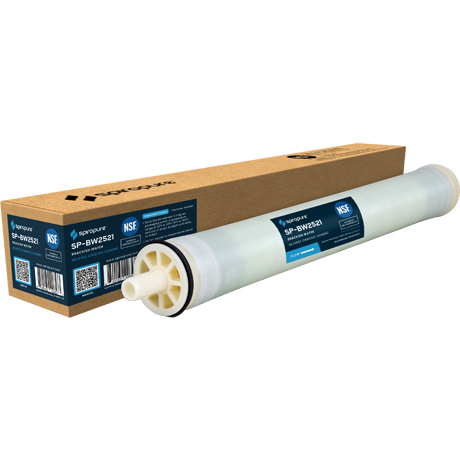
SpiroPure SP-BW2521 NSF-Certified 2.5x21 Commercial RO Membrane Brackish Water
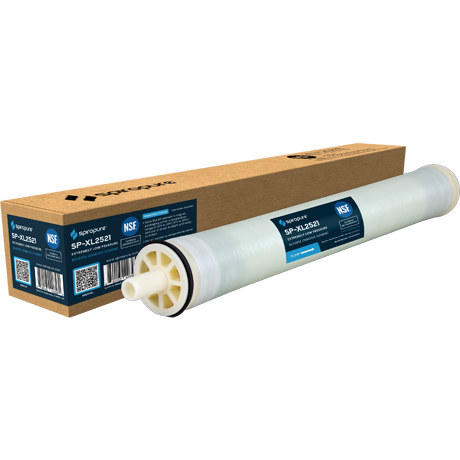
SpiroPure SP-XL2521 NSF-Certified 2.5x21 Commercial RO Membrane Extremely Low Pressure
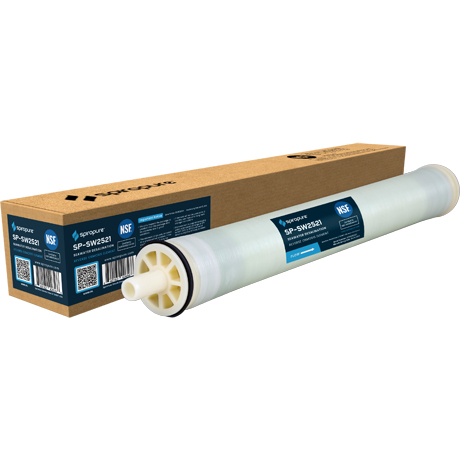
SpiroPure SP-SW2521 NSF-Certified 2.5x21 Commercial RO Membrane Seawater Desalination
Key Factors to Consider When Selecting a Commercial RO Membrane
There are several factors that go into selecting a commercial RO membrane. While All Filters does not sell complete systems and cannot advise on the best setup for your operation, we can speak to the fundamentals of reverse osmosis filtration that go into identifying the right membrane type and size. Membrane size, in particular, is critical for achieving your desired permeate output (GPD) in a cost-effective way.
Work with your industry consultant or installer to make sure you're not undersizing, which leads to frequent filter replacements and added strain on the system, or oversizing, which increases upfront and energy costs without a corresponding benefit.
Understand Your Feed Water Quality
What determines which membrane type is right for your feed water? Testing is the starting point for identifying whether a standard, high-rejection, low-pressure, or fouling-resistant membrane fits your application. A handful of feed water characteristics drive that decision:
- Total dissolved solids (TDS): the primary factor in choosing operating pressure and rejection rate; higher TDS generally calls for a higher-rejection membrane like SpiroPure's Brackish Water (BW) series
- Hardness: elevated calcium and magnesium accelerate scaling on the membrane surface over time
- Chlorine: left untreated, it degrades most standard RO membranes and needs to be removed upstream
- Turbidity, silica, and iron: raise fouling potential and can shorten membrane life significantly
Cleaner, low-TDS sources can often use an Extremely Low Pressure (XL) or Ultra Low Pressure (UL, industrial sizes only) membrane at meaningfully lower operating cost, once these factors are accounted for.
Pre-filtration matters just as much as the membrane itself, since sediment and chlorine left untreated will prematurely clog or foul an RO membrane, one of the more expensive components in any system. What that looks like generally depends on system size:
- Larger commercial and industrial operations typically use sediment filter housings, which All Filters supplies, along with high-volume carbon tanks, which we don't currently carry
- Smaller systems more commonly use sediment and carbon cartridges in standard Big Blue (4.5-inch) housings, available from All Filters in a range of micron ratings
Determine Your Required Water Production
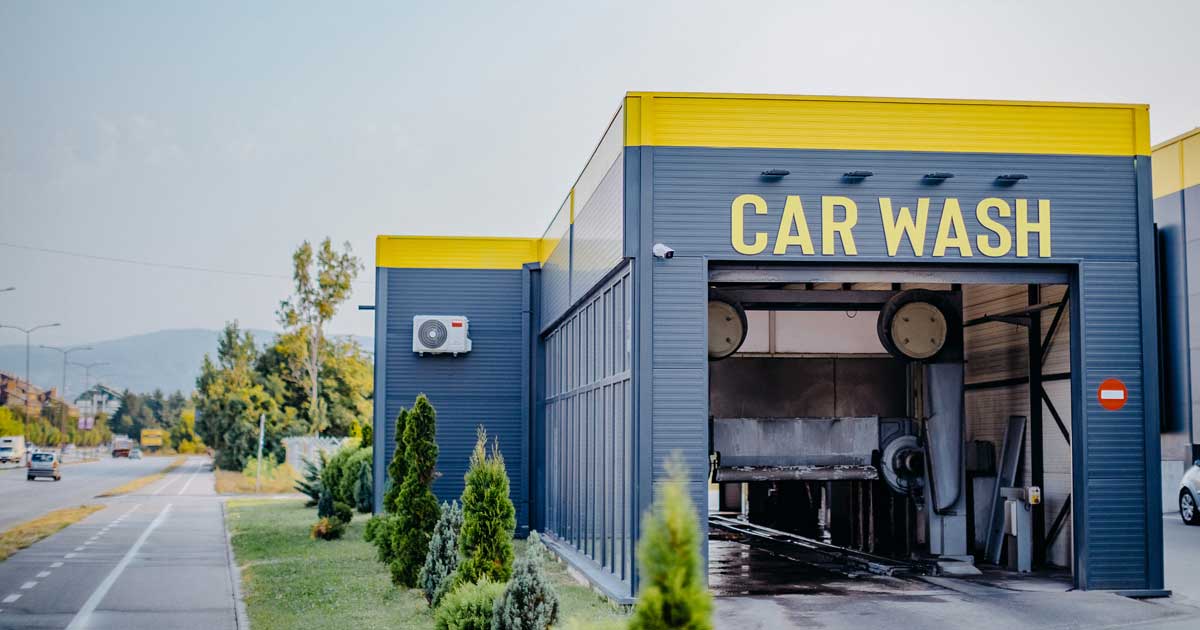
How much purified water does your operation actually need? Required output, typically measured in gallons per day (GPD) or liters per hour (LPH), determines how many membranes your system needs and what capacity each one should provide. Peak demand matters more than average daily use: a car wash or laundromat with concentrated usage windows needs enough membrane capacity to keep up during those peaks, not just to hit a daily average. Undersized capacity leads to inconsistent output and premature wear from running constantly near maximum while oversized capacity may add unnecessary upfront cost.
Choose the Correct Membrane Size
What size commercial RO membrane do you need? It's matched to your existing pressure vessel dimensions rather than chosen independently, so a membrane that doesn't fit your housing simply won't seal correctly (if at all), regardless of its performance specs. Common sizes break down by category:
- Commercial: 2521 (2.5" x 21"), 2540 (2.5" x 40"), and 4021 (4" x 21")
- Residential: often sold by GPD such as 50, 100, and 200, though may also be labeled 1812, 2012, or 3013
- Industrial: 4040 and 8040, though this is largely an internal sizing category; these larger elements are commonly used in plenty of commercial operations too, not just heavy industrial settings
Always verify your exact housing dimensions before ordering a replacement.
Check the Required Operating Pressure
RO membranes are engineered to perform within a specific pressure range, measured in pounds per square inch (PSI). Installing a membrane rated for a different pressure range than your system supplies can reduce water production, increase energy consumption, or reduce salt rejection, even if the physical size matches perfectly. Extremely Low Pressure and Ultra Low Pressure membranes are designed for systems that can't or don't need to run at higher PSI, while Brackish Water and Seawater Desalination membranes require considerably more pressure to push water through the dense membrane structure needed to achieve the target reduction of TDS.
Check your system's rated operating pressure before selecting a replacement, as attempting to use a high-pressure element in a low-pressure system may not yield the desired results. For example, accidentally ordering an SW membrane simply because the size is right won't work in a low-pressure environment, resulting in lower output. Membranes do have variability above and below their tested pressure, but in this example the difference is too great.
RO membranes are engineered to perform within a specific pressure range, measured in pounds per square inch (PSI). Installing a membrane rated for a different pressure range than your system supplies can reduce water production, increase energy consumption, or reduce salt rejection, even if the physical size matches perfectly. Extremely Low Pressure and Ultra Low Pressure membranes are designed for systems that can't or don't need to run at higher PSI, while Brackish Water and Seawater Desalination membranes require considerably more pressure to push water through the dense membrane structure needed to achieve the target reduction of TDS.
SpiroPure SP-BW2540 NSF-Certified 2.5x40 Commercial RO Membrane Brackish Water
SpiroPure SP-XL4021 NSF-Certified 4x21 Commercial RO Membrane Extremely Low Pressure
SpiroPure SP-SW2540 NSF-Certified 2.5x40 Commercial RO Membrane Seawater Desalination
Check your system's rated operating pressure before selecting a replacement, as attempting to use a high-pressure element in a low-pressure system may not yield the desired results. For example, accidentally ordering an SW membrane simply because the size is right won't work in a low-pressure environment, resulting in lower output. Membranes do have variability above and below their tested pressure, but in this example the difference is too great.
How to Match a Replacement Membrane With Your Existing System
The most reliable way to match a replacement membrane is also the simplest: find the model number printed on your existing membrane and cross-reference it. That single piece of information tells you far more than specifications alone, since manufacturers build slightly different internal variations even within the same nominal size and pressure rating.
If you don't have the model number, gather what you do know: the membrane's physical dimensions, its rated GPD output, and your system's operating pressure. This narrows the field considerably, though without a model number, a supplier can typically only confirm that a replacement matches your standard size, not guarantee identical performance, since ratings and specifications are demonstrated under specific lab testing conditions that vary somewhat between manufacturers.
Check the original invoice or order history if you have it, since that often includes the model number even when the physical label has worn off or become illegible. All Filters' cross-reference charts for commercial and industrial RO membranes map common OEM model numbers directly to compatible SpiroPure replacements.
Find Commercial RO Replacement Filters at All Filters
This commercial RO membrane selection guide comes down to one practical step: once you know your membrane's model number, size, and operating specifications, finding a compatible replacement is straightforward.
In the commercial category, All Filters stocks SpiroPure reverse osmosis replacement filters across Extremely Low Pressure, Brackish Water, and Seawater Desalination categories, sized to match standard commercial pressure vessels. In addition, Ultra Low Pressure, Fouling Resistant, and Energy Saving variations are available in the 4040 and 8040 industrial category.
Browse by model number using our cross-reference charts, or search by size and rejection rate if you're starting from your system's specifications rather than an OEM part number. Compatible replacements typically run 30 to 50 percent less than OEM pricing without a performance tradeoff when properly matched.