Why Choosing the Right Water Softener Size (and Type) Matters
 Andrew
May 27, 2026
#descaler
#graincapacity
#hardwater
#softwater
#waterconfidence
#watersoftener
#watertreatment
Andrew
May 27, 2026
#descaler
#graincapacity
#hardwater
#softwater
#waterconfidence
#watersoftener
#watertreatment
- Water softener size is its "grain capacity," or the total hardness minerals a system removes between regeneration cycles, the tank's physical dimensions
- The standard sizing formula multiplies household size by daily water use per person by water hardness in grains per gallon (GPG), then multiplies by seven for a weekly capacity target
- An undersized softener regenerates too often and wears out faster; an oversized unit wastes salt and may allow bacteria to develop in an underused brine tank
- Some jurisdictions restrict or prohibit salt-based softeners due to brine discharge
- For mildly hard water, a salt-free descaler may be a more practical solution
A water softener that's too small can't keep up with demand, cycling through regeneration constantly and delivering hard water during peak hours. One that's too large wastes salt, ties up money in unnecessary capacity, and in some climates creates sanitation concerns in an underused brine tank. And one that's juuuuust right? Easy. You can find the Goldilocks of water softening with a couple of calculations. And for some households, a salt-free Water Softening alternative may solve the hard water problem with even less fuss.
What Does Water Softener "Size" Actually Mean?
When sizing experts ask themselves what size water softener do I need for my customer, they're not asking about the tank's footprint or height. Instead, they're asking about grain capacity.
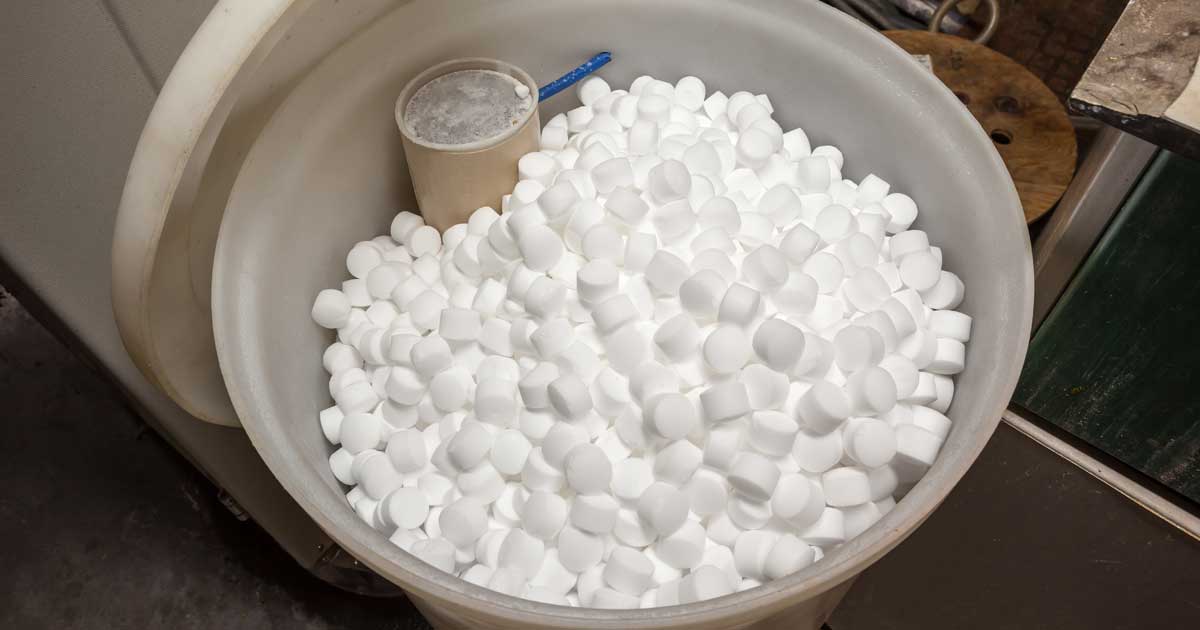
Grain capacity is the total amount of hardness minerals that a softener can remove from your water supply before it needs to flush its resin bed with a salt brine solution to reset its ion-exchange capability in a process called regeneration. (Read more about how softeners and conditioners work in our Quick Guide: Water Descaler Versus Water Softener.)
Residential softeners are sold in standard grain capacities: 16,000, 24,000, 32,000, 40,000, 48,000, and 64,000 grains are the most common. These numbers reflect the system's effective capacity at roughly 75% of its rated maximum to provide a buffer. A 32,000-grain softener, for example, is typically operated at a working capacity of around 24,000 grains between regeneration cycles, with the remaining capacity held in reserve for peak usage days.
Primary Factors That Determine Water Softener Size
Three variables drive every sizing calculation: how hard your water is, how many people live in your home, and how much water your household uses each day. Each affects the math differently, and getting all three right produces a reliable result.
Water Hardness and Its Impact on Sizing
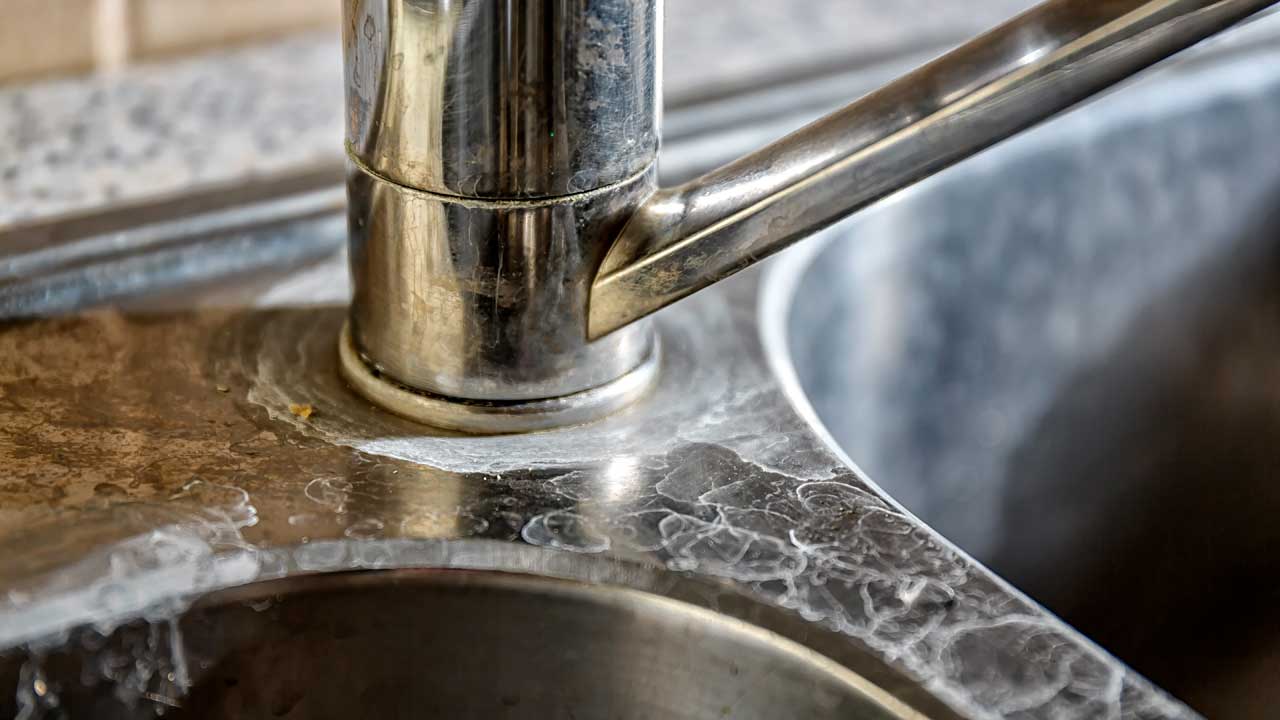
Water hardness is measured in grains per gallon (GPG), the concentration of calcium and magnesium dissolved in your water supply. Water under 3.5 GPG is considered soft; 7 GPG and above is definitively hard; water above 10.5 GPG is very hard and represents a significant softener load.
The harder your water, the more grains your softener must remove per gallon. In turn, a larger capacity unit will be needed to maintain a reasonable regeneration interval. High levels of iron also have an impact.
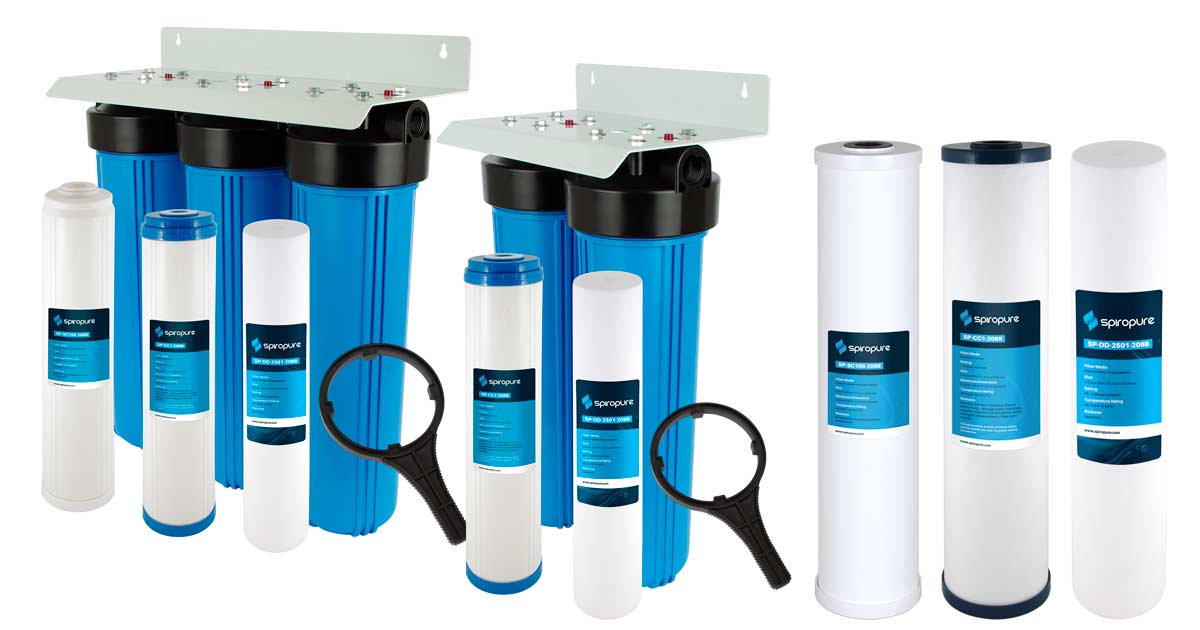
Mildly hard water in the 3–7 GPG range is worth evaluating separately: at those levels, a salt-free descaler cartridge may condition the water effectively without ion exchange, no brine tank, and no salt. Our comparison descaler versus water softener helps identify which approach fits your water and your household. For example, a cartridge-style whole-house system like the SpiroPure SP-WH300 might be sufficient for some homes.
How Household Size Affects Water Softener Needs
The number of people in your household is the simplest input in the sizing formula. More people means more water used for showering, laundry, dishes, and cooking — leading to more hard water minerals flowing through the resin bed each day. A one-person household on very hard water in Phoenix may need no more capacity than a family of six in Portland.
Daily Water Usage and Flow Rate Considerations
It all comes together in a measure called daily grains of hardness, or grain load. The industry standard for sizing purposes is 75 gallons of water per person per day, but real-world use can be lower in homes with modern, super-efficient fixtures versus those with thirsty appliances and a wider range of water use. If you're irrigating a large yard or the teens are regularly raising money with car washes on the lawn, both are going to raise your average.
The 75-gallon figure covers all standard household uses: showers, toilets, laundry, dishwasher, cooking, and drinking. Reviewing your monthly utility bill and dividing total usage by the billing days gives a precise daily figure specific to your home. Higher daily usage demands a larger grain capacity or more frequent regeneration.
How to Determine What Size Water Softener You Need Step-by-Step
Figuring out what size water softener you need follows the same three-step process regardless of household size or water source. Work through each step in order and you'll arrive at a target grain capacity that matches your actual demand. This is also how to determine what size water softener will regenerate at a healthy interval — roughly once every five to seven days — without running the resin to exhaustion or wasting salt on unnecessary cycles.
Step 1: Calculate Your Water Hardness
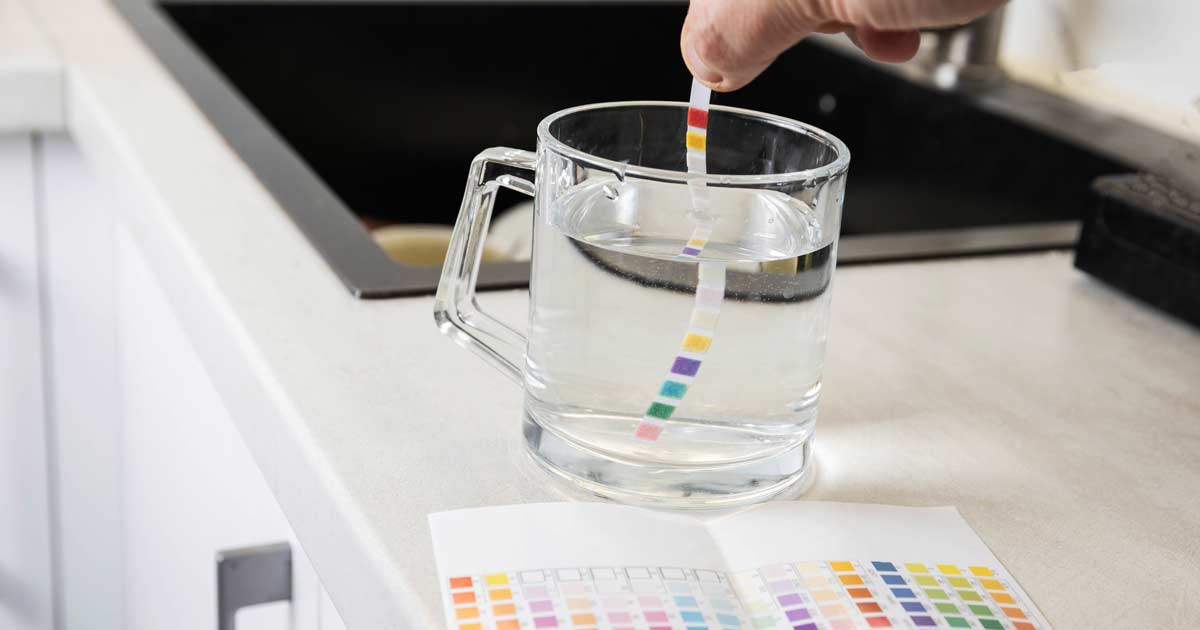
City water customers can find hardness data in their municipal water quality report, which utilities are required to publish annually and post online. If your report shows hardness in ppm or mg/L, divide by 17.1 to convert to GPG. Well water users should test directly. If your water contains iron, record that figure as well and add 5 GPG for every 1 ppm of iron to your hardness total before proceeding.
Step 2: Estimate Your Daily Water Usage
Multiply the number of people in your household by 75 gallons. A family of four produces an estimated daily usage of 300 gallons. If your actual water bills show consistently higher usage, use your actual per-day figure instead. The goal is an accurate baseline — water softener sizing based on low estimates results in a chronically undersized system.
Step 3: Apply the Sizing Formula
With your daily usage and hardness figures in hand, the formula works in two stages:
Daily grain removal requirement:
People × Gallons per person per day × Water hardness (GPG) = Daily grains
Weekly grain capacity target:
Daily grains × 7 days × 1.25 (25% reserve buffer) = Target grain capacity
Example: A four-person household using 300 gallons per day at 10 GPG produces a daily grain requirement of 3,000 grains. Multiplied by 7 days and a 1.25 buffer, the target capacity is 26,250 grains — which rounds to a standard 32,000-grain system. That system, operating at its 75% working capacity of 24,000 grains, regenerates roughly every eight days under normal demand.
Water Softener Sizing Chart (Quick Reference)
The table below shows recommended grain capacities for common combinations of household size and water hardness. These figures incorporate the 25% reserve buffer and assume 75 gallons per person per day. Use this chart to determine what size water softener you need at a glance, then confirm with the formula above if your household's usage or hardness is atypical.
| Household Size | Soft (0–3.5 GPG) | Moderately Hard (3.5–7 GPG) | Hard (7–10.5 GPG) | Very Hard (10.5+ GPG) |
|---|---|---|---|---|
| 1–2 people | Consider descaler | 16,000 | 16,000 | 24,000 |
| 3–4 people | Consider descaler; up to 16,000 | 24,000 | 32,000 | 48,000 |
| 5–6 people | 16,000 | 32,000 | 48,000 | 64,000+* |
| 7+ people | 24,000 | 48,000 | 64,000 | Use formula* |
* Large households at very hard water levels (10.5+ GPG) can exceed the capacity of standard residential units. Use the sizing formula above, or consult a water treatment professional about high-capacity or dual-tank systems.
Source: The four-tier hardness classifications follow the U.S. Geological Survey (USGS) standard scale converted to grains per gallon using the 17.1 mg/L per GPG conversion. Some use a five-tier scale that adds an "extremely hard" category above 15 GPG, but this subdivision isn't part of the USGS or WQA standard. While not inaccurate, it may be used to justify upsizing recommendations. When in doubt, run the formula above with your actual water test result rather than relying on a tier label.