What Is a Reverse Osmosis Water Filter System? A Guide to Under Sink RO
 Andrew
June 18, 2026
#fluoride
#heavymetals
#PFAS
#reverseosmosis
#romembrane
Andrew
June 18, 2026
#fluoride
#heavymetals
#PFAS
#reverseosmosis
#romembrane
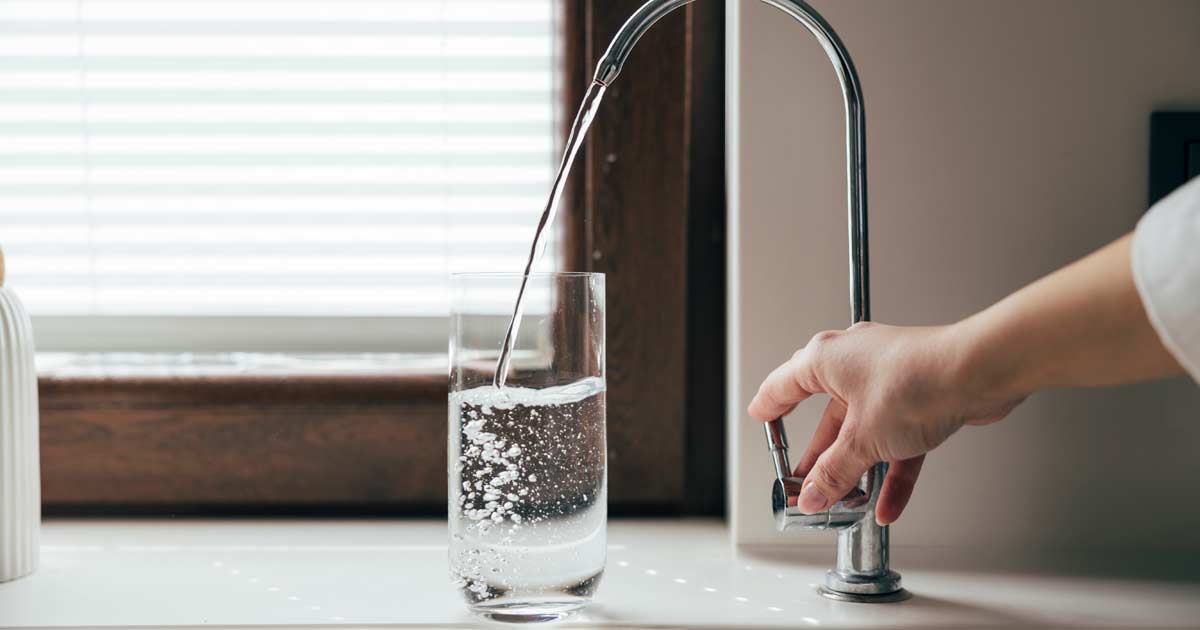
- A reverse osmosis system forces water through a semi-permeable membrane to remove dissolved contaminants that standard filters cannot capture.
- RO systems use multiple filtration stages to protect the membrane and improve water quality.
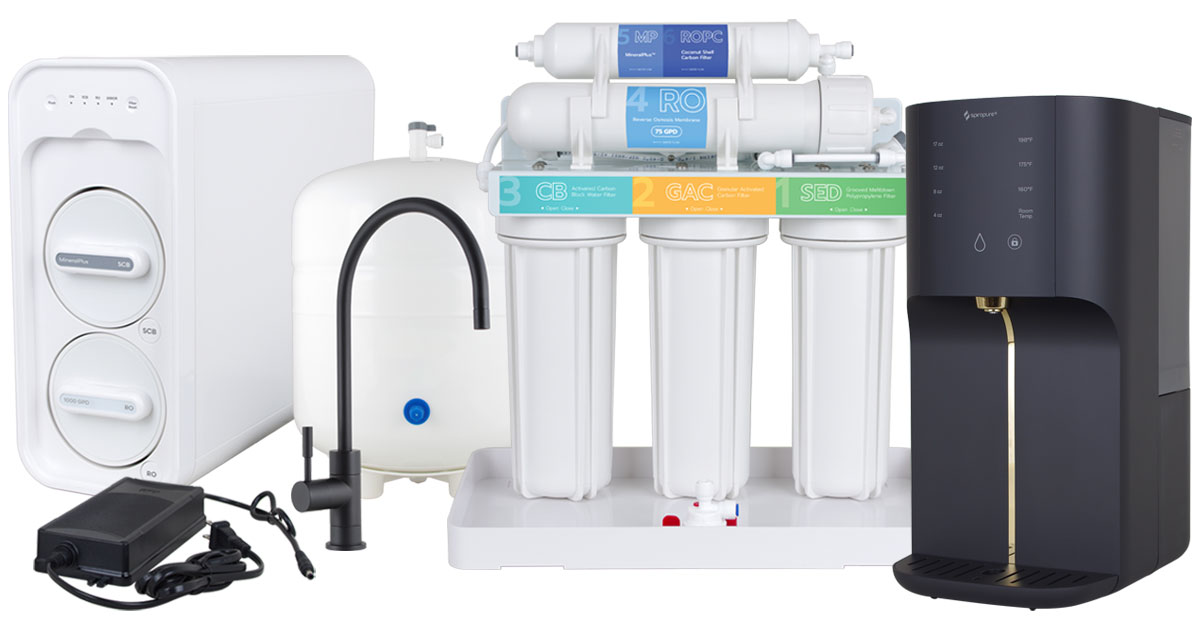
- Home RO systems are available in traditional tank, tankless, and countertop configurations to fit different households and installation needs.
How Does a Reverse Osmosis Water Filter System Work?
At its core, what does reverse osmosis do? It forces water under pressure through a semi-permeable membrane with pores approximately 0.0001 microns in diameter — small enough to block dissolved minerals, heavy metals, and some of the tiniest chemical impurities while allowing water molecules to pass through freely. Contaminants that can't cross the membrane are flushed away through a drain line rather than accumulating in the filter.
This membrane is the heart of every RO system, but it doesn't work alone. The full process runs in stages. A sediment filter followed by one or more carbon filters act as pre-filters to remove larger dirt and dust particles, chlorine, and other chemicals before water reaches the membrane. This pre-filtration is essential: chlorine degrades RO membranes over time, and sediment clogs them prematurely. After the membrane, post-filters polish the water for taste before it reaches your glass. Most quality systems also include a remineralization stage, which restores beneficial minerals like calcium and magnesium that the membrane removes alongside contaminants. To understand the full mechanics in depth, see our guide to how reverse osmosis works.
Key Components of a Reverse Osmosis System
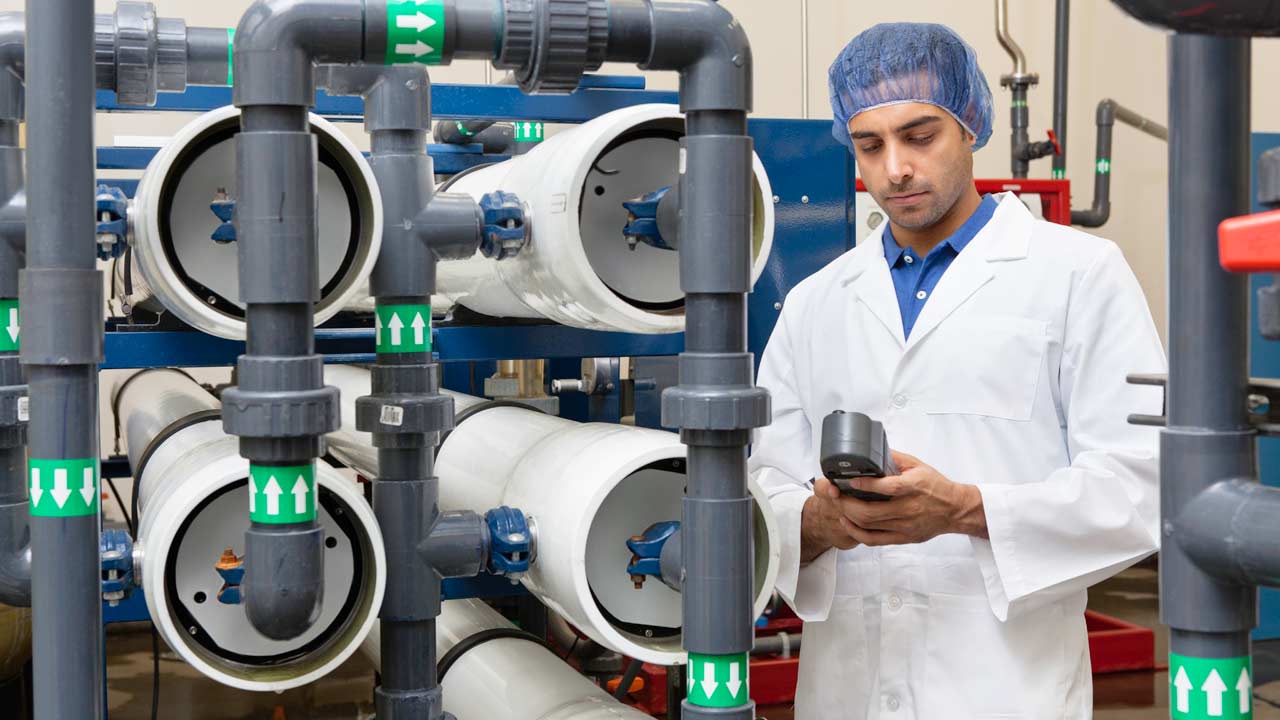
Almost every RO system contains the same core components, whether contained in systems small enough to fit under your sink or major commercial and industrial-scale systems. Of course, a large-scale seawater desalination plant has to process a lot more than the standard household, but the principles are often the same. Here's a typical sequence:
Sediment pre-filter. The first stage catches dirt, rust, sand, and particulate matter that would otherwise clog or damage downstream components.
Carbon pre-filter(s). One or two carbon stages remove chlorine, chloramines, and organic compounds that would degrade the RO membrane. At home, GAC filters typically handle bulk chlorine removal; carbon block filters provide finer pre-filtration.
RO membrane. The precision filtration stage. Under pressure, the semi-permeable membrane restricts dissolved solids, heavy metals, fluoride, nitrates, PFAS, and other molecular contaminants from passing through. Flow rate and production depend on whether regular household pressure or booster pumps are used.
Storage tank or on-demand production. Traditional tank systems store filtered water in a pressurized tank for immediate delivery. A tankless water filter system produces water continuously on demand, eliminating the tank entirely while requiring access to a grounded outlet and are dependent on electricity.
Post-filter and remineralization. A final carbon polish removes any residual taste or odor. Remineralization stages such as SpiroPure's MineralPlus media restore healthy minerals and balance pH, addressing the flat taste often associated with heavily purified water.
Dedicated faucet. RO systems at home deliver filtered water through a separate faucet installed at the sink, keeping it distinct from the main water supply. Combination faucets have a separate filtered water line.
What Does Reverse Osmosis Do? Contaminants Removed and Limitations
What does reverse osmosis do that other filters can't? The RO membrane operates at the molecular and ionic level, reducing organic and inorganic contaminants too small for carbon or sediment filtration to capture. A properly functioning home RO system typically removes or significantly reduces: total dissolved solids (TDS), lead, fluoride, nitrates, arsenic, PFAS and PFOS compounds, chlorine and chloramines (via pre-filters), certain heavy metals, and dissolved pharmaceuticals. (The word "ionic" may call to mind a filtration method even more thorough than RO: deionization. Learn more about the science behind ultra-pure DI water and when to use it.)
Limitations are worth understanding clearly. If you're on a well, standard RO systems without UV or chlorination stages preceding them may not reliably or safely eliminate bacteria or viruses from drinking water. While the membrane's pore structure reduces most, it may not achieve the near-total microbial removal that UV disinfection provides. RO also produces some wastewater in the filtration process: traditional tank systems typically generate two to four gallons of drain water per gallon of filtered output, though modern high-efficiency membranes have substantially improved this ratio.
For households on well water, municipal supplies with known non-microbial contamination, or anyone concerned about PFAS, lead, or fluoride specifically, RO filtration is the most reliable residential solution available. See our comparison of reverse osmosis systems to find the right configuration for your home.
Benefits of a Reverse Osmosis SystemWater quality. RO produces measurably purer water than any standard single-stage filter, addressing a broader range of contaminants with documented reduction rates.
Taste. Removing chlorine, dissolved minerals, and trace compounds produces noticeably cleaner-tasting water. It's a difference most households notice immediately in drinking water, coffee, tea, and cooking. Think of all the water your potatoes and pasta absorb when cooking!
Cost savings. A household spending $500–$1,000 annually on bottled water can replace that expenditure with a system costing $143–$294 plus $60–$113 in annual filter replacements — saving hundreds of dollars per year while eliminating plastic waste.
Appliance protection. Feeding an RO system's output to a refrigerator or coffee maker reduces mineral scale buildup that degrades appliance performance and lifespan over time.
Why Choose All Filters for Reverse Osmosis Systems?
All Filters stocks a full range of SpiroPure reverse osmosis systems — traditional tank, tankless, and countertop — alongside the replacement filters needed to maintain them. Every system ships with the components required for installation, and replacement filter sets are organized by model so reordering is straightforward. If you're comparing configurations or deciding between under-sink and countertop options, our reverse osmosis systems page and tank vs. tankless comparison guide are the right starting points.
FAQs on What Is a Reverse Osmosis Water Filter System
What does reverse osmosis do in home water filtration?
How is an RO system different from other types of water filters?
Does a reverse osmosis water filter system remove all contaminants?
What is the difference between a tankless and traditional RO system?
How often should you change the filters in a reverse osmosis system?
RELATED PRODUCTS

Reverse Osmosis Filters
Choose from Tankless RO, Traditional Tank RO Systems, Countertop RO, and more!
Enhanced RO Filters Most TDS!
Check Out Our Remineralization Options!
SpiroPure 1000 GPD Tankless RO System with Remineralization SP-RO1000TL
List Price: $656.94
Our Price: $328.47
Save: $328.47
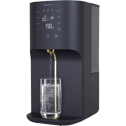
SpiroPure SP-RO500 Instant Hot Water Countertop RO with Remineralization
List Price: $399.48
Our Price: $199.74
Save: $199.74