How to Replace a KitchenAid Refrigerator Water Filter
 Andrew
November 17, 2026
#EveryDrop
#fridgefilter
#how-to
#kitchenaid
#refrigeratorwaterfilter
#replacementfilters
#whirlpool
- KitchenAid refrigerators use push-button, quarter-turn, pull-out, and compartment filters, so the removal step depends on your model.
- Match the number on your old filter to the replacement, using AllFilters.com's chart for EveryDrop filters and SpiroPure compatible options.
- Flush the new filter before normal use. Volume varies, with KitchenAid giving a general range of about 1–4 gallons.
- Reset the status light afterward. The sequence varies by model, so follow your control panel or owner’s manual.
- Replace the filter about every six months, or sooner if flow drops, you're a high-usage household, or the indicator lights up.

Whirlpool EDR1RXD1 (Filter 1) EveryDrop Refrigerator Water Filter

Whirlpool EDR2RXD1 (Filter 2) EveryDrop Refrigerator Water Filter
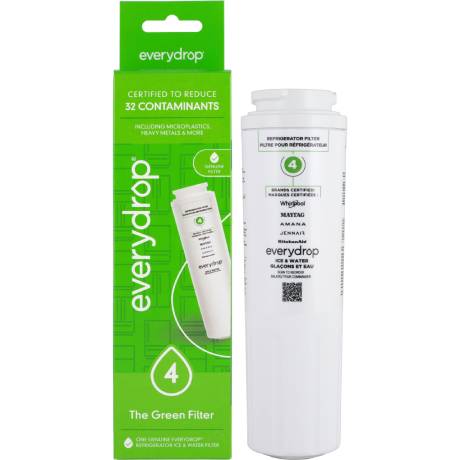
Whirlpool EDR4RXD1 (Filter 4) EveryDrop Refrigerator Water Filter
How to Replace a KitchenAid Refrigerator Water Filter Step by Step
Like most brands, the housing and filter style in KitchenAid refrigerators vary by model. Models may include push-button, quarter-turn, pull-out and compartment-style filters, so these steps describe common variations, not one universal method.
Step 1: Locate and Open the Water Filter Compartment
Happily, filters are usually easy to locate. It's often visible in an upper corner inside the refrigerator or right there between the crisper drawers. Matching caps may conceal it into the base grille. If it sits behind a compartment door, open it fully. Shelf or grille access varies by model, so check your manual.
Step 2: Remove the Old KitchenAid Water Filter
Keep a towel handy for drips (most models do not requiring turning off the water supply), then release the filter the way your model requires. Removal may involve:
- Pressing an eject or release button
- Pulling the filter straight out
- Turning the filter counterclockwise
- Opening the filter housing first
Keep any reusable filter cap your model requires. Don’t force the filter, since too much pressure could break it.
Step 3: Prepare and Install the New Water Filter
Match your old filter’s number to the replacement. The chart covers EveryDrop filters 1 through 4 with SpiroPure compatible options, and our KitchenAid Refrigerator Water Filters page has more. Check KitchenAid’s documentation if these steps miss the mark for your model.
| EveryDrop Filter | SpiroPure Compatible | Also Known As |
|---|---|---|
| Filter 1 (EDR1RXD1) | SP-WP100 | W10295370 |
| Filter 2 (EDR2RXD1) | None listed | W10413645 |
| Filter 3 (EDR3RXD1) | SP-WP300 | 4396710 |
| Filter 4 (EDR4RXD1) | SP-WP400 | UKF8001 |
Then install it:
- Remove protective packaging or caps.
- Check that the O-rings remain correctly positioned.
- Align the filter, with any arrows pointing up.
- Insert or rotate it for your refrigerator’s mechanism.
- Make sure it’s fully seated before closing the compartment.
KitchenAid notes that an improperly installed filter can affect dispenser and ice-maker flow. An old, exhausted filter won't help at all and in some instances can enable the growth of bacteria or mold.
Step 4: Flush the New Refrigerator Water Filter
Flushing clears trapped air and excess carbon before normal use while priming the carbon for use. Place a sturdy container, such as a large bucket, under the dispenser, hold the pad for five seconds, release for five and repeat until water flows. The volume varies by filter, with KitchenAid giving a general range of about 1–4 gallons, so check your filter’s instructions. The dispenser may sputter at first while air leaves the line.
Step 5: Reset the Water Filter Status Light
Many KitchenAid models need the filter indicator reset manually after replacement, and the procedure varies between models. KitchenAid documents several sequences, from holding a Filter button for a few seconds to choosing Filter Reset from a menu. Some smart KitchenAid refrigerators connect to app and will send you alerts. Follow your control panel instructions or owner’s manual for your exact refrigerator.
Common Problems After Replacing a KitchenAid Water Filter
We wish we could say every filter replacement resulted in immediate delivery of fresh water from your dispenser. In most cases, if something has gone wrong, there's an easy fix.
- Slow or no water flow. Low flow? We don't like the sound of that. Check that the replacement filter is in fact compatible and properly seated. Sometimes a double O-ring or other connector configuration lends to a partial installation that doesn't engage the water. KitchenAid separately documents installation-related flow problems, so reopen the compartment and confirm the filter is locked in.
- Water sputtering from the dispenser. Air may remain in the line, so continue the recommended flushing procedure until the water runs steadily.
- Water dripping after replacement. A small amount right after dispensing can occur, but persistent leaking should prompt you to recheck the installation, including the O-rings and seating. A crack in the housing will require repair.
- Filter light stays on. The status may need a manual reset, so follow the steps for your model.
Whirlpool owns KitchenAid, so our guide to replacing a Whirlpool refrigerator water filter may also help. With a great line of refrigerators, KitchenAid may someday stand in for "refrigerator," too. To get the best water out of them, keep on top of those replacement filters.
FAQs on How to Replace a KitchenAid Refrigerator Water Filter
How do I get my water filter out of my KitchenAid refrigerator?
How to reset KitchenAid after replacing water filter?
How to remove and replace refrigerator water filter?
What tool can I use to remove a refrigerator water filter?
How often should I replace my KitchenAid refrigerator water filter?
RELATED PRODUCTS

Refrigerator Water Filters
Full line of filters available, including Whirlpool, LG, Samsung, Kenmore, Frigidaire, and more!
Drink Purer, Healthier Water!
Super Value Packs Available

SpiroPure SP-WP400 Whirlpool EDR4RXD1 / Filter 4 / UKF8001 Compatible Refrigerator Water Filter
List Price: $25.90
Our Price: $12.95
Save: $12.95

SpiroPure SP-WP100 Whirlpool EDR1RXD1 Refrigerator Water Filter Replacement
List Price: $25.90
Our Price: $12.95
Save: $12.95